
Ontario’s Iconic Bird is in Trouble
The Common Loon – Ontario’s official bird and a symbol of our pristine wilderness lakes – faces serious threats. Its haunting calls define summer on Drag and Spruce Lakes, but loon populations are declining in parts of the province. Breeding success has dropped significantly in some areas (e.g., over 30% in parts of central Ontario since the 1990s), with multiple stressors at play: human disturbance, mercury from pollution, acid rain effects, climate change, and – critically – lead poisoning from fishing tackle.
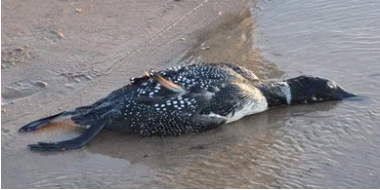
Lead Poisoning: The Leading Preventable Killer
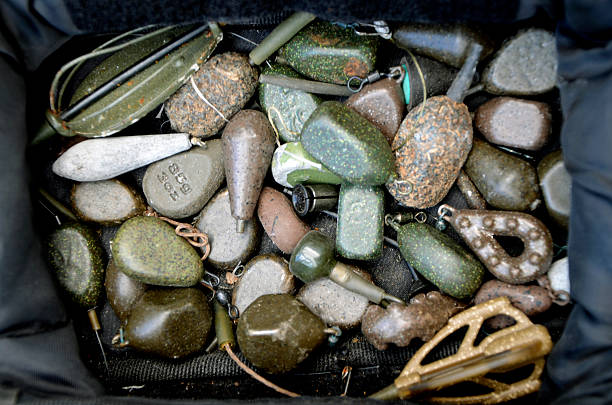
Lead fishing sinkers, jigs, and weights lost or discarded in lakes are a silent, deadly threat. Studies show lead poisoning is a major (often the leading) cause of death in adult Common Loons across Ontario and Canada, especially in high-angling area.
- Across North America, lead poisoning accounts for 11-49% of documented adult loon mortalities, with higher rates (up to 48-50% in some regions like parts of New England) where fishing pressure is intense. In Canada, it’s frequently the top documented cause in freshwater habitats.
- In southern Ontario lakes with heavy recreational fishing, lead tackle mortality is among the most frequent for loons.
- Lead is the primary route of toxic exposure for loons – far more than other sources.
How Loons Ingest Lead – and Why It’s Fatal
Loons mistake small lead sinkers/jigs for pebbles (grit they swallow to grind food in their gizzards) or ingest them while eating fish (sometimes swallowing hook, line, and sinker whole). They also grab at struggling fish or baits with embedded tackle.
- Just one small piece (pencil-tip size or split shot) is enough to kill an adult loon.
- Lead grinds in the gizzardàfine particles enter the bloodstreamàpoisons organsàcauses slow, painful death in 2-4 weeks.
- X-rays of affected loons often show multiple pieces lodged inside, plus hooks/line.
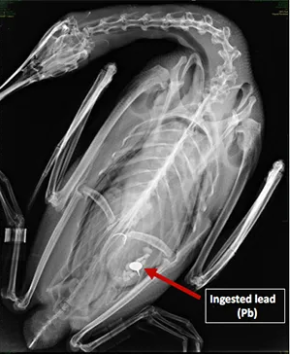
The Massive Scale of the Problem
Lost lead tackle pollutes our waters on a huge scale:
- Government estimates (ECCC) indicate ~460-545 metric tonnes of lead sinkers and jigs are lost annually in Canadian waters – equivalent to the lead in ~20,000 car batteries or 44 fully loaded dump trucks dumped into lakes and rivers every year. A significant portion affect Ontario’s fresh waters.
- Over 90% of fishing tackle sold today contains lead, making accidental loss common.
Impacts Beyond Loons:
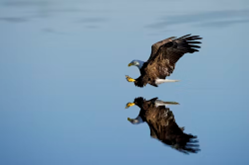
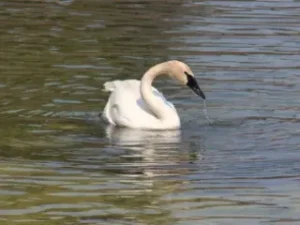
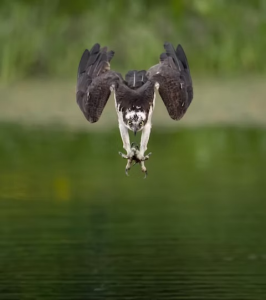
Lead poisoning affects at least 75+ bird species, including bald eagles, trumpeter swans, ospreys, great blue herons, mergansers, mallards, Canada geese, sandhill cranes, gulls, terns, hawks, and vultures. It also harms fish health/behavior (compromising survival) and enters the food web.

Safe, Effective Alternatives Exist
Tungsten, bismuth, steel, tin, and other non-toxic options outperform lead in many ways:
- Denseràsink faster, less water resistance, fewer snags.
- Better bite detection and feel.
- No poisoning risk to wildlife.
Switching costs the average angler just ~2% (or 0.3-3.6%) more annually—affordable protection for our lakes.
The Good News: This is 100% Preventable
Bans/restrictions in places like U.S. states (e.g., New Hampshire, Maine) and Canadian national parks have reduced lead-related deaths. By choosing lead-free tackle, participating in swaps/drop-offs, and spreading the word, we can protect loons on Drag and Spruce Lakes—and across Ontario.
Sources:
- Environment and Climate Change Canada (ECCC) reports,
- Canadian Wildlife Service,
- ca,
- Grate et al. (2018/2019 studies on loon mortality),
- Scheuhammer et al. (2003/2009 reviews),
- Canadian Lakes Loon Survey.