
Shocking Facts About Lead Fishing Tackle
Lead poisoning from lost or discarded fishing tackle (sinkers, jigs, weights) is a silent, preventable killer in our lakes. Here’s what the science shows:
- Lead is highly toxic – a powerful neurotoxin with no safe level when ingested by wildlife (or humans). It’s been phased out of paints, gasoline, and pipes for good reason, yet it’s still common in fishing tackle.
- Just one tiny piece can kill – A small lead sinker or jig (about the size of a pencil tip or split shot) is enough to fatally poison an adult loon, eagle, duck or swan. Death is slow and painful, occurring over 2-4 weeks as lead grinds in the gizzard, enters the bloodstream, and damages organs.
- Loons are hit hardest – Lead poisoning is the leading cause of death in adult Common Loons (Ontario’s official bird) in many regions, with studies showing it accounts for 11-49% of documented adult loon mortalities across North America. In high-angling areas like parts of Ontario, it’s frequently the top cause, contributing to breeding success declines of over 30% since the early 1990s.
- Millions affected – Lead from fishing tackle poisons millions of birds annually, including at least 75 other species like bald eagles, trumpeter swans, ospreys, great blue herons, mergansers, mallards, Canada geese, sandhill cranes, gulls, terns, hawks, and vultures.
- Massive scale in Canada – Recent government estimates indicate 545 metric tonnes of lead sinkers and jigs are lost in Canadian waters every year – equivalent to the lead in ~20,000 car batteries or 44 fully loaded dump trucks dumped in our lakes and rivers annually.
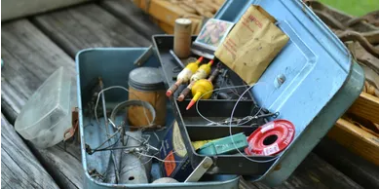
- Loons mistake it for food – Loons ingest small pebbles as grit to grind food in their gizzards. They often mistake shiny lead tackle for pebbles or swallow it while eating fish (sometimes with embedded hooks/line). X-rays of affected loons show multiple pieces lodged inside.
- Even fish suffer – Studies show ingested lead negatively impacts fish health, behavior, and survival over weeks, compromising entire aquatic food webs.
- Switching is affordable – Over 90% of fishing tackle sold today contains lead, but switching to safer alternatives (tungsten, bismuth, steel, tin) increases the average angler’s annual costs by just ~2% (or less, per some estimates 0.3-3.6%). These options often perform better: denser, more sensitive bite detection, less snagging, and no toxicity.
Watch the videos to see how ingested lead affects a Loon and a Duck.
These facts come from studies by Environment and Climate Change Canada, Canadian Wildlife Service, loon conservation programs, and partners like fishleadfree.ca. The good news? This is 100% preventable – by choosing lead-free tackle and supporting collection efforts, we can protect our loons and lakes.
Ready to help? See how easy it is in the next sections!
Sources:
-
- Environment Canada reports,
- Grade et al. 2018/2019 studies,
- Fishleadfree.ca,
- Canadian Lakes Loon Survey.